

Vocational Rehabilitation Services

Supporting Individuals & Families in the Transition to Adulthood.
Let’s make sure you and your loved one’s next chapter starts with a strong foundation.
If you’re a parent or family member of a young person with a disability, you’ve probably heard that transition planning should begin by age 16. But for many families, that timeline comes and goes and is often put off until just before high school graduation. For some, the transition to higher education, vocational training, or employment begins well after school ends, leaving individuals and families to navigate the process alone.
At D. Reed Coaching, Consulting & Advocacy, LLC, we’re here to help you get ahead of the curve.
We offer personalized support and guidance to help your youth, young adult, and your family navigate the next steps with confidence.
What is Vocational Rehabilitation?
Vocational Rehabilitation (VR or Voc-Rehab) is an individualized employment program. Participants may receive a variety of service funded by the State that include job training, job placement, and services to support job retention. Many applicants are referred by schools, hospitals, and other organizations, but you may apply directly for service. Vocational Rehabilitation serves all disability groups and ages.

Who is Eligible for Vocational Rehabilitation?
According to state and federal guidelines, individuals with disabilities are eligible for VR services if they:
Have a physical or mental impairment that presents a substantial barrier to employment; and be able to benefit from VR services to achieve employment
AND
Need VR services to prepare for a job, or to get, keep, or regain a job.
Those who receive Supplemental Security Income (SSI) and/or Social Security Disability Insurance (SSDI) benefits are considered eligible for Vocational Rehabilitation services.
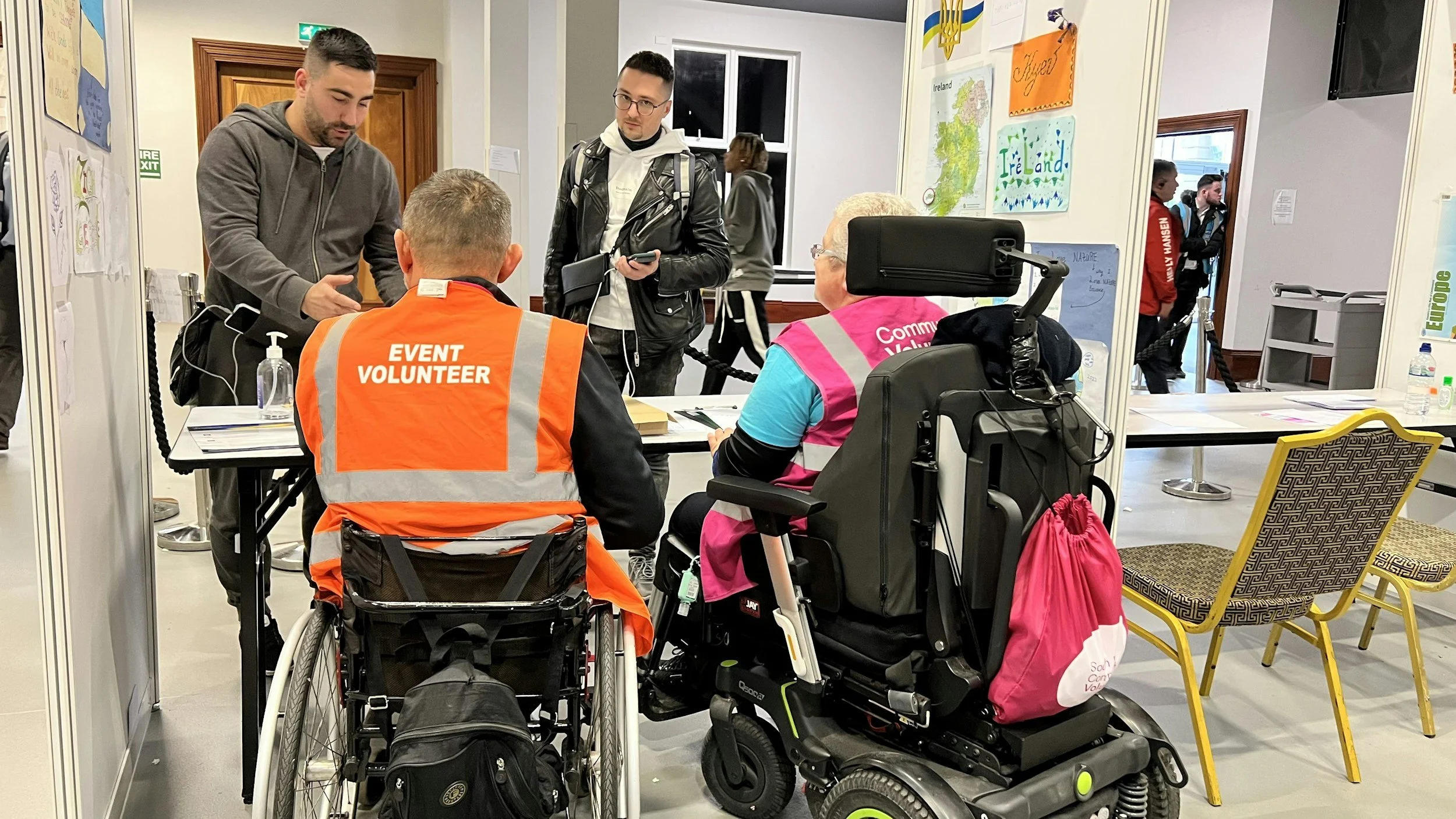
Where and how do we start?
The page linked below will take you directly to the Texas Workforce Commission VR Office Locator. To begin the process of receiving VR services, you must apply and be assigned a vocational rehabilitation counselor (VRC) .
Note: Our firm is an approved service provider by the Texas Workforce Commission. We are not employees of Texas Workforce Commission, nor any of its affiliates. Please refer to the Texas Workforce Commission Vocational Rehabilitation website for the most up-to-date information regarding these services and direct all question regarding specific services to your VRC.
Below is the current listing of our post-secondary transition planning and contracted vocational rehabilitation services
-
![]()
Life Plans
The person-centered plan is not a vocational rehabilitation service. It is designed to outline the individual’s goals and desired outcomes for their life beyond the PK-12th grade system. Driven by the individual themselves, the Life Plan outlines post-secondary goals for daily living, highlights strengths and preferences, identifies clinical and support needs, and outlines necessary safeguards including individual back-up plans and strategies for education, employment, and housing (individual, group, home, etc.)
-
![]()
Pre-Employment Transition Services (Pre-ETS)
This services is available with or without approved VR services. Pre-employment transition services are designed to support students with disabilities as they prepare for life after high school. These services focus on essential skills needed for successful employment, including work-based learning experiences, job exploration, and the development of social and communication skills.
-
![]()
Career Planning Assessment
This service is available as a contracted VR service. The assessment helps individuals with disabilities work with a Service Provider to create an Individual Employment Plan and determine their education and training needs. It allows individuals to explore higher education options and occupations of interest.
-
![]()
Job Skills Training
This service available as a contracted VR service. Job Skills Training is designed to equip individuals with the necessary skills to obtain competitive integrated employment. Training includes resume writing, interview skills, active listening and effective communication skills, disclosure training, and more based on the individuals’ needs.
-
![A group of four young people, two males and two females; one young African-American male with a short chin beard wearing a white and navy blue t-shirt looking on as a young White female in a yellow dress smiles]()
Personal Social Adjustment Training
This service is available as a contracted VR service. Personal and Social Adjustment Training (PSAT) is a specialized training program that helps individuals develop or re-establish personal and social behaviors required for professional positions. It addresses specific barriers to employment and tailors training to individual needs.
-
![Young Asian male wearing black wire-rimmed glasses wearing an dark read apron and yellow t-shirt standing in front of a gray counter in a coffee shop with a small black sign to his right that reads "Mana Food & Co Manual Coffee"]()
Supported Employment
This services is available as a contracted VR service. Supported Employment is designed to assist individuals with disabilities with higher support needs, including intellectual disabilities and mental health issues, in obtaining and maintaining employment. This usually involves working with an Employment Specialist present during work shifts to provide necessary supports and guidance toward independent work.
-
![]()
Vocational Adjustment Training (VAT)
This services is available as a contracted VR service. Vocational Adjustment Training (VAT) is a work readiness service that prepares individuals with a variety of abilities for successful employment. It is designed to build interpersonal skills related to basic traits and attitudes that will lead to successful employment.
-
![Blurred image of a gridline notebook on top of a blue and white striped fabric. The notebook page has small black outlined boxes forming a checklist and a person's hand holding a black writing pen in the foreground]()
Vocational Evaluation
This service is available as a contracted VR service. Vocational evaluations examine an individual’s ability to earn income by working and includes a thorough review of specific work characteristics, including occupational interests, specific job skills, worker traits, general intelligence, temperaments, physical capacities, strength, range of motion, and other work-related functions and abilities.
-
![Man with an olive complexion wearing a blue polo-style shirt and shorts stands with his left hand in his shorts pocket at the end of a grocery store aisle flanked by products on an endcap. Two ladies stand talking down the aisle behind the man]()
Work Adjustment Training
This service is available as a contracted VR service. Work Adjustment Training is an on-the-job work training program that provides an opportunity for persons to learn universal skills that every employer looks for when hiring employees, such as reliability, responsibility, teamwork, problem-solving, customer service, and effective communication.
-
![A man with a dark complexion and dark hair pulled back in a ponytail wears a white hard hat, long-sleeved black shirt, and reflective vest holding a long plank of wood capped with metal at the end and stacks of the same planks in front and behind him]()
Work Experience Placement
This services is available as a contracted vocational rehabilitation service. Work Experience Placement is a short-term work placement undertaken by students or people who are looking for employment in a specific field. Similar to an internship, the purpose of a work experience placement is to gain practical experience and find out what the work environment is like.


FAQs
-
The first step in the process is to visit the Texas Workforce Commission website to connect with a VR Counselor. You can complete the online referral form or visit your location Workforce Solutions office in person.
https://www.twc.texas.gov/programs/vocational-rehabilitation/adults
-
If you already have a VR Counselor, you will need to contact them via phone or email and inform them that you would like a Service Authorization (SA) issued to D. Reed Coaching, Consulting & Advocacy, LLC. From there, the counselor will arrange a meeting to discuss the approved services and grant the Service Authorization.
-
D. Reed Coaching, Consulting & Advocacy, LLC is contracted to serve all counties in Texas; however, the primary counties served are Harris, Brazoria, Montgomery, Fort Bend, and Waller counties. We are able to serve others, but our current clients reside in these counties.
-
The timeframe varies based on VR Counselor responsiveness and availability; however, the Texas Workforce Commission website states that within 60 days or less from application, your VR counselor determines eligibility for services and grants the SA to the service provider you select.
-
The answer to that is a tricky one. You can send them an email with my copied (i.e., CC) letting them know that you want to select a Service Provider and you need them to contact you or me as soon as possible. You can also call your local office and ask to speak to a supervisor about your services and let them know about the challenges you have experienced getting in contact with your VR Counselor.
-
The short answer is no. While many of the services offered through VR do align with employment, there are also options to prepare students with educational opportunities for degrees or certifications. D. Reed Coaching, Consulting & Advocacy, LLC can assist you or your loved one with these options as well.
Let’s work together


Disclaimer
This disclaimer (“Disclaimer”) sets forth the general guidelines, disclosures, and terms of your use of the dreedcca.com website (“Website” or “Service”) and any of its related products and services (collectively, “Services”). This Disclaimer is a legally binding agreement between you (“User”, “you” or “your”) and D. Reed Coaching, Consulting & Advocacy, LLC (“D. Reed Coaching, Consulting & Advocacy, LLC”, “we”, “us” or “our”). If you are entering into this Policy on behalf of a business or other legal entity, you represent that you have the authority to bind such entity to this Policy, in which case the terms “User”, “you” or “your” shall refer to such entity. If you do not have such authority, or if you do not agree with the terms of this Policy, you must not accept this Policy and may not access and use the Website and Services. By accessing and using the Website and Services, you acknowledge that you have read, understood, and agree to be bound by the terms of this Disclaimer. You acknowledge that this Disclaimer is a contract between you and D. Reed Coaching, Consulting & Advocacy, LLC, even though it is electronic and is not physically signed by you, and it governs your use of the Website and Services.
Table of contents
Representation
Any views or opinions represented on the Website are personal and belong solely to D. Reed Coaching, Consulting & Advocacy, LLC and do not represent those of people, institutions or organizations that D. Reed Coaching, Consulting & Advocacy, LLC may or may not be associated with in professional or personal capacity unless explicitly stated. Any views or opinions are not intended to malign any religion, ethnic group, club, organization, company, or individual.
Content and postings
You may print or copy any part of the Website and Services for your own personal, non-commercial use, but you may not copy any part of the Website and Services for any other purposes, and you may not modify any part of the Website and Services. Inclusion of any part of the Website and Services in another work, whether in printed or electronic or another form or inclusion of any part of the Website and Services on another resource by embedding, framing or otherwise without the express permission of D. Reed Coaching, Consulting & Advocacy, LLC is prohibited.
Reviews and testimonials
Testimonials are received in various forms through a variety of submission methods. The testimonials are not necessarily representative of all of those who will use Website and Services, and D. Reed Coaching, Consulting & Advocacy, LLC is not responsible for the opinions or comments available on the Website, and does not necessarily share them. All opinions expressed are strictly the views of the reviewers.
The testimonials displayed are given verbatim except for grammatical or typing error corrections. Some testimonials may have been edited for clarity, or shortened in cases where the original testimonial included extraneous information of no relevance to the general public. Testimonials may be reviewed for authenticity before they are available for public viewing.
Indemnification and warranties
While we have made every attempt to ensure that the information contained on the Website is correct, D. Reed Coaching, Consulting & Advocacy, LLC is not responsible for any errors or omissions, or for the results obtained from the use of this information. All information on the Website is provided “as is”, with no guarantee of completeness, accuracy, timeliness or of the results obtained from the use of this information, and without warranty of any kind, express or implied. In no event will D. Reed Coaching, Consulting & Advocacy, LLC be liable to you or anyone else for any decision made or action taken in reliance on the information on the Website, or for any consequential, special or similar damages, even if advised of the possibility of such damages. Information contained on the Website are subject to change at any time and without warning.
Changes and amendments
We reserve the right to modify this Disclaimer or its terms related to the Website and Services at any time at our discretion. When we do, we will revise the updated date at the bottom of this page. We may also provide notice to you in other ways at our discretion, such as through the contact information you have provided.
An updated version of this Disclaimer will be effective immediately upon the posting of the revised Disclaimer unless otherwise specified. Your continued use of the Website and Services after the effective date of the revised Disclaimer (or such other act specified at that time) will constitute your consent to those changes.
Acceptance of this disclaimer
You acknowledge that you have read this Disclaimer and agree to all its terms and conditions. By accessing and using the Website and Services you agree to be bound by this Disclaimer. If you do not agree to abide by the terms of this Disclaimer, you are not authorized to access or use the Website and Services. This policy has been created with the help of the disclaimer generator.
Contacting us
If you have any questions, concerns, or complaints regarding this Disclaimer, we encourage you to contact us using the details below:
This document was last updated on September 16, 2026
